How Connection Supports Emotional Wellbeing and Simple Ways to Feel Less Alone
When we Try to Do it Alone
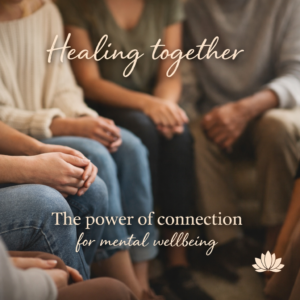
There are moments in life when things feel heavy, uncertain, or overwhelming. During these times, many people turn inward and try to process everything on their own. While solitude can be meaningful, healing does not always happen in isolation. In many cases, something begins to shift simply by being in the presence of others.
The Nervous System is Social
Human beings are not designed to regulate alone. Our nervous systems are constantly responding to the people around us. Through subtle cues that include: tone of voice, facial expression, and shared rhythm. Through these subtle cues, we begin to feel either more at ease or more activated. This process is often referred to as co-regulation.
When we are in a supportive environment with others, the body can begin to settle naturally. We may feel: less tense, more grounded, and more connected. Even without speaking, being in a calm and intentional space with others can create a sense of safety.
Why Group Experiences Support Mental Health
Community-based experiences offer something different from individual care. They are not about fixing or analyzing. Instead, they create space for:
Shared Presence: Being around others who are also reflecting or processing can reduce the sense of isolation that often accompanies stress, grief, or life transitions.
Normalizing Experience: Hearing others share their experiences can remind us that what we are feeling is not unusual or wrong.
Gentle Reflection: Group environments often allow insight to emerge naturally, without pressure.
Emotional Movement: Experiences like sound, breath, or guided reflection can help emotions move in ways that feel more accessible than when we are alone.
Simple Ways to Invite More Connection Into Your Life
Connection does not always have to be deep or structured. Often, it begins with small, steady moments of shared presence. You might try:
- Attend a group or class: You don’t have to share. Simply being in the room can be enough.
- Sit in a shared space: A coffee shop, park, or library can offer a quiet sense of belonging.
- Reach out to one person: A simple message or call can gently reopen connection.
- Take a walk with someone: Side-by-side movement can make conversation feel easier.
- Engage in a shared activity: Cooking, art, or a class can create connection without pressure.
- Offer small acknowledgments: A smile, eye contact, or a brief hello can shift your day.
- Spend time with animals: Connection can also be grounding, calm, and nonverbal.
- Practice being present with someone you already know: Even a few minutes of undistracted attention can deepen connection.
- Join a community event: Local gatherings or workshops can create shared experience.
- Allow yourself to simply be around others: Connection does not always require conversation.
Connection does not have to be immediate or intense. Sometimes it begins with simply not being alone.
A Gentle Practice: Reconnecting Through Small Moments
If you’ve been feeling disconnected, you might try this simple practice.
1. Pause and Notice
Take a moment to check in with yourself.
How connected do I feel right now?
There is no right answer.
2. Choose One Small Step
Select one small action that feels manageable today.
You don’t need to do everything. Just begin somewhere.
3. Stay Present
As you engage, notice your breath, your body, and any small shifts.
You are not trying to force connection — only allowing yourself to be near it.
4. Reflect Gently
Afterward, you might ask:
Did anything feel slightly different?
Even subtle shifts matter.
Community Spaces at The Lotus Center
Connection can take many forms, and having supportive environments can make it easier to begin. At The Lotus Center, we offer several group experiences designed to support reflection, connection, and emotional wellbeing:
- Grief Support Group — a compassionate space for those navigating loss
- Death Café — an open conversation about life, death, and meaning
- Drum Journey — a rhythmic meditation experience for introspection and emotional exploration
- Elemental Grief Circles — a guided 5-week experience exploring grief through reflection and symbolism
- Mindfulness Class — a structured practice that supports awareness and presence
- Breathwork Class — a guided breathwork practice that supports nervous system regulation
- Integration Group — a supportive space for integrating personal insight and transformational experiences
Each of these offerings provides a different pathway into connection, while sharing a common intention: helping people feel less alone.
Connection Changes How We Carry Things
Connection does not remove difficulty. But it can change how we experience it. When we feel seen, heard, or simply in the presence of others, what we are carrying can feel more manageable. Not because the situation has changed, but because we are no longer holding it alone.
A Gentle Invitation
If you have been feeling disconnected, overwhelmed, or simply curious about new ways to support your mental health, you might consider exploring a small step toward connection. You do not have to share before you are ready. Sometimes, simply being present is enough. Call our friendly Lotus Center team any time if you have any questions about how to join one of our groups or if you would like to make an appointment with a therapist or medical provider. You can reach us at 385-272-4292. All of our groups are open to the community, and we are accepting new clients.