When “Thinking It Through” Isn’t Enough
If you’ve ever told yourself to calm down, only to feel your heart race faster, you’re not alone. So many of us try to solve emotional pain from the neck up. We try to think our way through it, but mental health isn’t only mental. It’s physiological. It lives in breath patterns, muscle tension, digestion, sleep, and the subtle rhythms of the nervous system. Especially when it comes to trauma, the body remembers first. Long before words arrive, the body has already responded by tightening, bracing, and holding. Once the nervous system takes over, it also affects how you think and what you think about. That’s why it is so difficult to think your way through it when your system is under stress.
Pause for a moment.
Feel your feet on the floor.
Notice the temperature of the room.
Take one slow breath in…and an even slower breath out.
That exhale is sending a subtle message to your nervous system that you are safe enough right now. Can you notice any change in your body at this moment?
The Nervous System: Your Inner Regulator
By nature your nervous system is constantly scanning for safety and threat. When life gets overwhelming due to chronic stress, trauma, burnout, or illness, it can get stuck in survival mode. This isn’t a personal failure. It’s biology doing its best to protect you.
Resetting the nervous system doesn’t mean forcing calm. It means offering the body repeated experiences of nourishment, rhythm, and safety so it can gently shift out of “on guard” and into restoration.
This is where body-based care becomes essential. Body-based care works because the nervous system is the meeting point between mental health and physical experience.

Why Body-Based Care Supports Mental Health
Body-based approaches work with the nervous system instead of asking it to override itself. They help create regulation through sensation, nourishment, and presence.
This might look like:
- Slowing the breath and lengthening the exhale
- Supporting hydration, minerals, and nutrients that stress depletes
- Engaging the senses to anchor attention in the present moment
- Rebuilding trust with hunger, fullness, and digestion
When the body feels resourced, the mind often follows. Below are some of the body-based resources we offer for resetting the nervous system.
Replenishment as Regulation
Stress is expensive. It burns through nutrients, electrolytes, and energy reserves. Chronic stress taxes the nervous system, increasing physiological demand for hydration, minerals, and nutrients that support regulation and recovery. For some people, gentle physiological replenishment can feel like giving the nervous system a long exhale. IV vitamin infusions are an effective and efficient form of physiological replenishment.
At The Lotus Center, IV vitamin infusions are offered as a supportive, optional way to help the body restore hydration and nutrients that may be impacted by stress, fatigue, or burnout. Many clients describe the experience as a moment of deep settling and an invitation for the body to remember balance along with feeling replenished and rejuvenated.
Recognizing that regulation is shaped not only by what the body receives but how it receives it, we are creating a sensory sanctuary for truly restorative infusions. Designed with the nervous system in mind, this space offers a soft unhurried pace that invites the body to settle. At TLC, infusions become an experience of safety and rest, allowing nourishment to land more deeply. When the environment itself supports regulation, the body can shift out of vigilance and into repair. This makes replenishment not just something delivered, but something felt.
Learn more about our IV infusion options.
Mindfulness as a Bridge to Regulation
While IV replenishment supports the body at a physiological level, mindfulness invites awareness to meet the body where it already is. Mindfulness supports regulation by helping the nervous system shift out of threat-based patterns and into present-moment safety.
Mindfulness isn’t about emptying the mind or forcing calm. It’s about noticing, with kindness, what’s happening inside and around you. When attention rests on breath, sensation, or the present moment, the nervous system receives a steady signal of safety. The nervous system recognizes that you are paying attention, so it doesn’t have to be the one on high alert. Over time, these small moments of presence can help reset the nervous system, offering regulation through relationship rather than control.
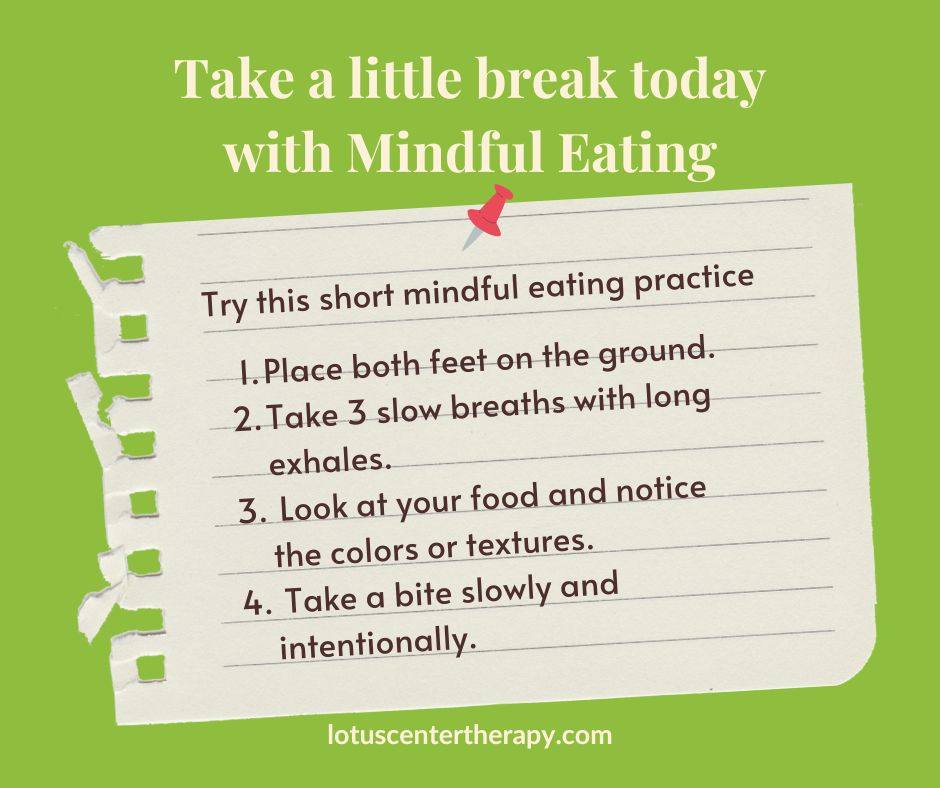
One of the most accessible places to practice this kind of embodied mindfulness is the everyday act of eating. Bringing mindfulness to eating brings nourishment, sensation, and awareness all together.
Mindful Eating: A Nervous System Practice
Eating is one of the most frequent nervous system events of the day and one of the most overlooked. Rushed meals, distracted bites, and food anxiety can keep the body in a subtle state of alarm without us even knowing.
Mindful eating is not about rules or perfection. It’s simply about slowing down and noticing. Eating slowly and with awareness directly signals safety to the nervous system, supporting digestion, emotional regulation, and internal attunement.
In our March Mindfulness Class on Mindful Eating, we’ll explore how slowing down with food can become a practice of regulation. We will practice tuning into taste, texture, satisfaction, and internal cues with curiosity and compassion. This kind of presence supports digestion, emotional attunement, and a gentler relationship with the body and with food.
If you’d like to learn more about the upcoming class, click here!
Whole Person Healing Includes Resetting the Nervous System
Resetting the nervous system is not a single moment or technique but rather a process that unfolds over time and must include the body. Nervous system regulation grows through learning how to listen to the body’s signals, respond with care, and build supportive practices that help the nervous system feel safer and more resourced.
This kind of healing honors the truth that the nervous system belongs to both the body and the mind, shaped by experience and capable of change. With patience, repetition, and compassionate support, regulation becomes less about “fixing” and more about cultivating a steady, lived sense of balance.
Call Us to Learn More
If you’re curious about what this kind of steady, supportive regulation could look like for you, we invite you to give us a call. Our APRNs offer collaborative, whole-person consultations where they can introduce you to support options that meet your unique needs and goals.
Please call us at 385-272-4292 to schedule an appointment, and begin a conversation about how nervous system–informed care can support your body, mind, and spirit at your own pace.