
Can Ketamine Help Us Change Longstanding Beliefs?
Exploring the science of neuroplasticity, new perspectives, and the role of ketamine-assisted psychotherapy.
Have you ever felt stuck in a story about yourself? Perhaps you’ve carried the belief that you’re not good enough, that you don’t belong, or that certain possibilities simply aren’t available to you. Even when we recognize that these beliefs may not be entirely true, changing them can be difficult. That’s because our beliefs aren’t just thoughts we consciously choose. They can become deeply familiar patterns of interpreting ourselves and the world that can be fairly difficult to break free from.
We may need help to experience something that allows us to see those patterns differently. This can come through therapy, through new experiences, or sometimes through an altered state achievable through certain pharmaceutical experiences. Ketamine is one such pharmaceutical that is known to help people rapidly change their perspective, their experience of their life, and their beliefs about themselves and the world.
There is growing interest in ketamine-assisted psychotherapy (KAP), an approach that combines the effects of ketamine with psychological support and reflection. Researchers are exploring how ketamine affects the brain, why it can produce rapid antidepressant effects in some people, and whether it may create opportunities for new ways of thinking.
Why Can Longstanding Beliefs Be Difficult to Change?
Our brains are constantly learning from experience. Over time, repeated thoughts, emotions, and experiences can reinforce familiar patterns of interpretation, and those patterns of interpretation can influence how we thing, feel, and experience the world.
Someone who has experienced repeated criticism, for example, may develop the belief, I’m never good enough. Even when they receive encouragement or achieve something meaningful, that old belief may continue shaping how they interpret new experiences. This doesn’t mean the belief is permanent, but recognizing a belief intellectually isn’t always enough to change the emotional response associated with it. Sometimes we understand that a thought isn’t entirely accurate while still experiencing it as deeply familiar. This is one reason researchers and clinicians are interested in approaches that may help people become more receptive to different perspectives.
What Does Ketamine Do in the Brain?
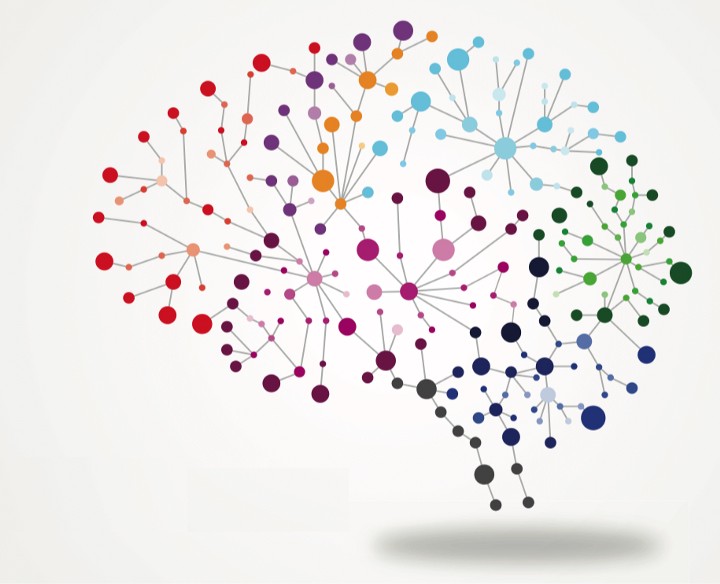
Ketamine works differently from many traditional antidepressant medications. One of its primary actions involves blocking certain NMDA receptors, which are part of the brain’s glutamate signaling system. Glutamate plays an important role in communication between nerve cells, learning, and memory. Research suggests that ketamine can trigger biological processes involved in neuroplasticity, which is the brain’s capacity to adapt and modify connections between neurons. These effects are being studied as possible contributors to ketamine’s rapid antidepressant action.
Neuroplasticity doesn’t mean that ketamine erases old beliefs or automatically creates new ones. Rather, researchers are investigating whether changes in brain signaling and adaptability may help support new learning and different patterns of responding.
Changing Beliefs and Ketamine: Cognitive Flexibility
Cognitive flexibility is our ability to adjust our thinking when circumstances change, consider alternative explanations, and respond to situations in different ways. For example, someone who believes If I fail, I’m a failure may have difficulty interpreting mistakes as opportunities to learn. Greater cognitive flexibility could help that person consider another perspective: I didn’t achieve the outcome I wanted, but that doesn’t define my worth or my future.
Some studies of ketamine treatment in depression have reported improvements in aspects of cognitive functioning, including cognitive flexibility. The possibility of greater flexibility is promising, but it shouldn’t be confused with a guarantee of personal transformation. Findings are mixed, and researchers are still working to determine how much of these changes comes directly from ketamine, from improvements in depression, or from other factors.
Could Ketamine Help Us See Ourselves Differently?
Beyond its biological effects, ketamine can temporarily alter perception, emotional experience, and the usual sense of self. Some people describe feeling less attached to familiar thoughts or experiencing their circumstances from an unfamiliar perspective. For someone who has spent years thinking, I’m not worthy of love, even briefly considering a different interpretation may feel significant.
However, it’s important to distinguish between a meaningful personal experience and a demonstrated therapeutic outcome. Researchers are investigating how ketamine may affect negative thinking patterns, self-related processing, and cognitive flexibility. These findings are still developing, and they don’t establish that ketamine reliably changes specific limiting beliefs.
What makes the possibility interesting is that sometimes a different perspective can become the starting point for further exploration. A familiar story may begin to feel less absolute. A previously overlooked possibility may become easier to consider. An individual may have new material to explore through psychotherapy after seeing their lives and themselves through the lens of ketamine.
Why Does Psychotherapy Matter?
A new perspective can be meaningful, but what happens afterward? Imagine recognizing during an experience that you’ve been holding yourself to an impossible standard. That realization may feel important, but returning to everyday life means encountering familiar situations, relationships, and emotional responses. It’s easy to fall right back into familiar patterns.
Ketamine-assisted psychotherapy combines ketamine treatment with psychological support. How might you respond differently the next time you make a mistake? What would it look like to practice self-compassion? How might you challenge an old expectation when it reappears? These are the kinds of questions that psychotherapy can help people explore after ketamine has given them some new insights and experiences.
Additionally, therapy in conjunction with ketamine helps people prepare intentionally for their ketamine experience, which can make the experience itself more meaningful, insightful, and potentially more useful. It can help people approach this psychedelic medication with more care and thus get more out of it.
The Role of Integration in Changing Beliefs
Integration refers to the process of reflecting on an experience, exploring its meaning, and considering how any insights might relate to everyday life. When we talk about ketamine-assisted psychotherapy, integration is an important part of the process. It isn’t about forcing an experience to have a particular meaning or expecting a dramatic breakthrough. Instead, it creates opportunities to ask questions such as:
- What stood out to me during the experience?
- Did I notice a familiar belief or pattern from a different perspective?
- Is there anything I want to explore further?
- What small changes might I want to practice in everyday life?
Sometimes an experience may feel profound. Other times, it may be subtle, confusing, or difficult to interpret. Integration offers space to explore those responses without assuming that every experience must produce a particular outcome. Integration also make space for people to incorporate insights from a medicine journey into everyday life.
Exploring New Possibilities at The Lotus Center
Our upcoming Align & Rise ketamine-assisted therapy retreat is centered on exploring limiting beliefs, familiar patterns, and the possibility of new perspectives. The retreat offers a structured experience that includes preparation, a ketamine-assisted therapy component with clinical oversight, and a dedicated integration session. The focus and intention of this retreat is specifically to examine beliefs and to potentially shift the ones that could be harmful or limiting.
Retreat: December 12–13, 2026
Integration: December 18, 2026
Ketamine-assisted treatment isn’t appropriate for everyone. Participation requires clinical screening, and individual experiences and therapeutic outcomes vary. For those interested in exploring whether this approach may be appropriate for their needs, our team can provide more information about the retreat and its clinical requirements.
Click here to learn more about Align & Rise or feel free to call our support team at 385-272-4292 to learn more!
What Else Might Be Possible?
The beliefs we carry can influence how we understand ourselves, our relationships, and our opportunities. A shift in our beliefs can mean a shift in the way we experience ourselves and our lives and an opportunity to change patterns that might be holding us back. While changing longstanding patterns isn’t always easy, our brains retain a capacity for learning and adaptation throughout life. Ketamine may be a key to improving that capacity.
Ketamine research offers an intriguing area of exploration: whether changes in brain signaling, mood, and perception may help some people approach familiar patterns differently. There is still much to learn, but perhaps the larger invitation is one that applies far beyond any particular treatment: What if the way we’ve always understood ourselves isn’t the only way to see our story?